
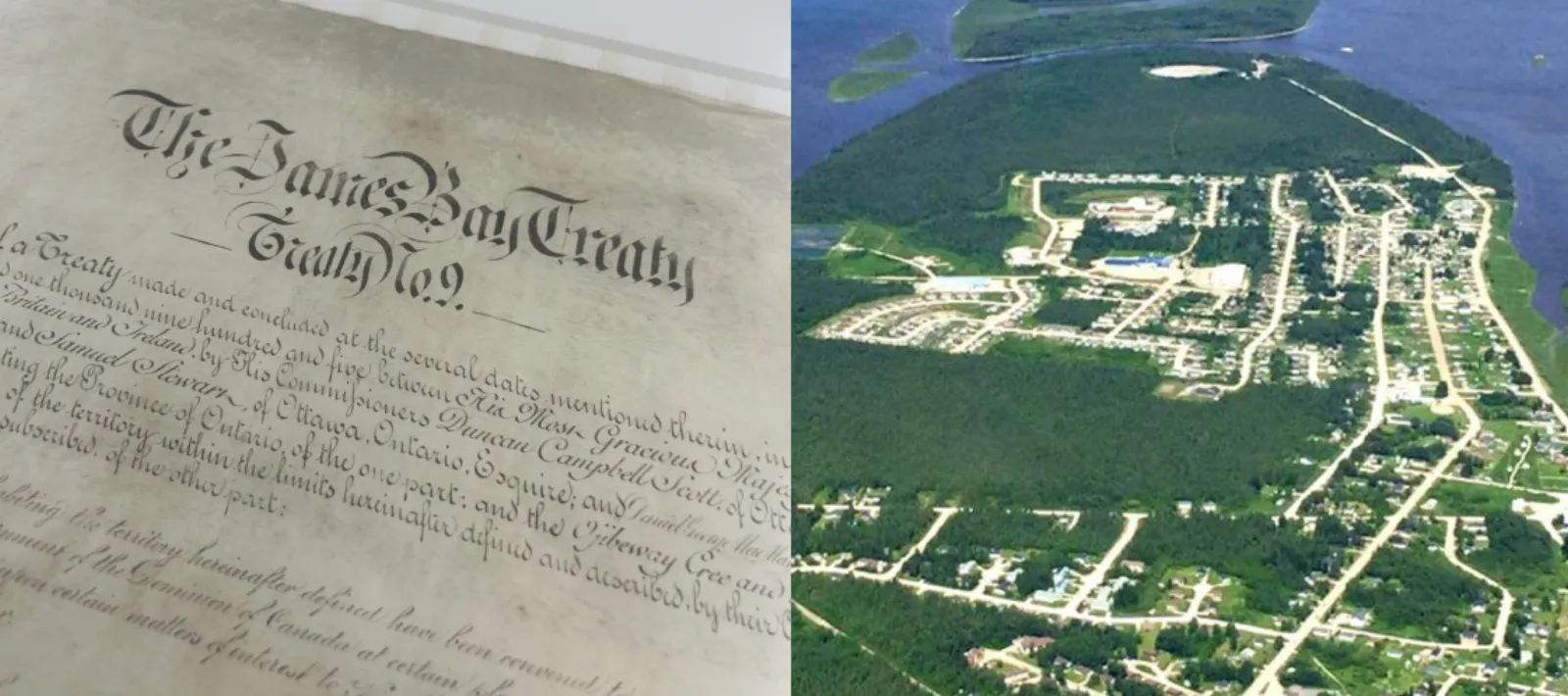
Bringing the Treaty home
This summer, Treaty No. 9 had a homecoming.
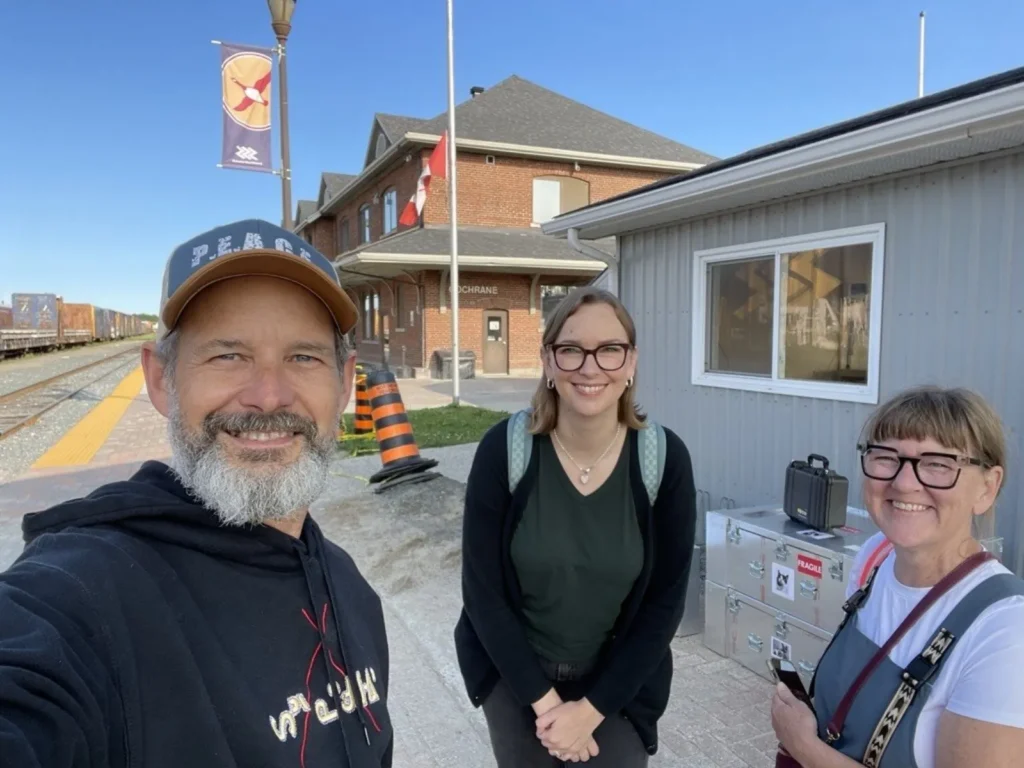
From July 27 to August 1, 2026, a small group of staff from the Archives of Ontario and Queen’s University Archives travelled north with the Treaty by plane, train, automobile and boat to Moose Factory, an island on the Moose River near the mouth of James Bay.
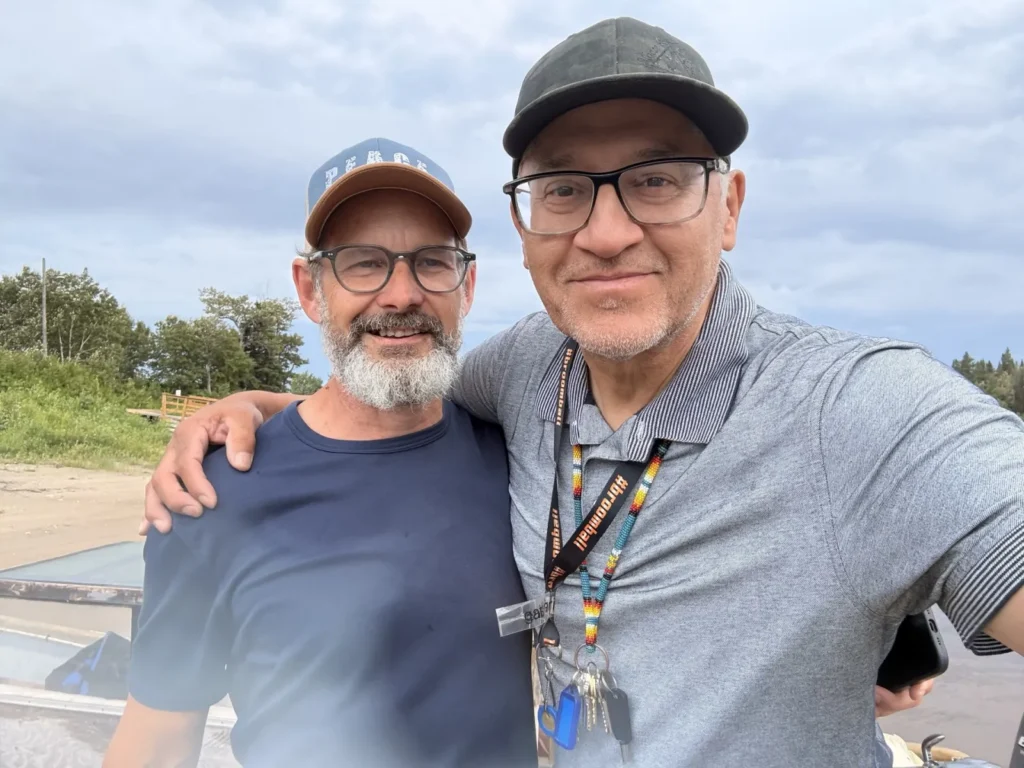
Archives Senior Manager Sean Smith and Conservator Adriane VanSeggelen shared the journey with Heather Home, archivist at Queen’s University Archives.
Their aim was to bring the Treaty to the annual Cree Gathering of Our People (GOOP), a celebration of Cree culture for over 500 people from across Treaty 9 territory and to share it with members of Moose Cree First Nation.
What is Treaty No. 9?
Treaty No. 9 is a historic agreement between Indigenous Nations (including the Anishinaabe and Omushkegowuk Peoples), the Crown and the Province of Ontario. It’s the only numbered treaty in Canada that includes Ontario as a signatory alongside the federal government.
The seven-page document, made from parchment (animal skin), was signed in 1905–1906. Later adhesions (bound in a leather volume) were added in 1929–1930. The Treaty is cared for by the Archives of Ontario, where it is kept in specially designed crates in a vault at our North York facility. But it’s also a living document, the provisions of which still apply to and directly impact people living in a region that covers about two-thirds of Ontario.
On this occasion, as on others past, the Treaty was displayed alongside Ontario commissioner Daniel G. MacMartin’s 1905 diary, which records the oral promises made during Treaty negotiations. The diary is now kept at Queen’s University Archives.
How to transport a Treaty
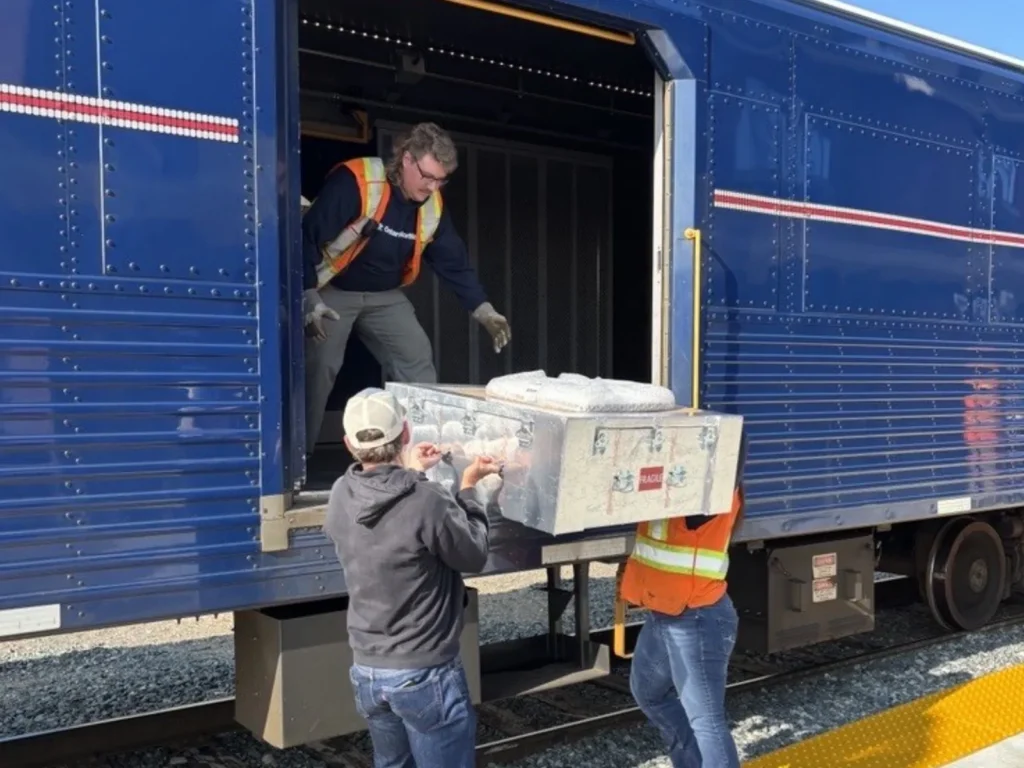
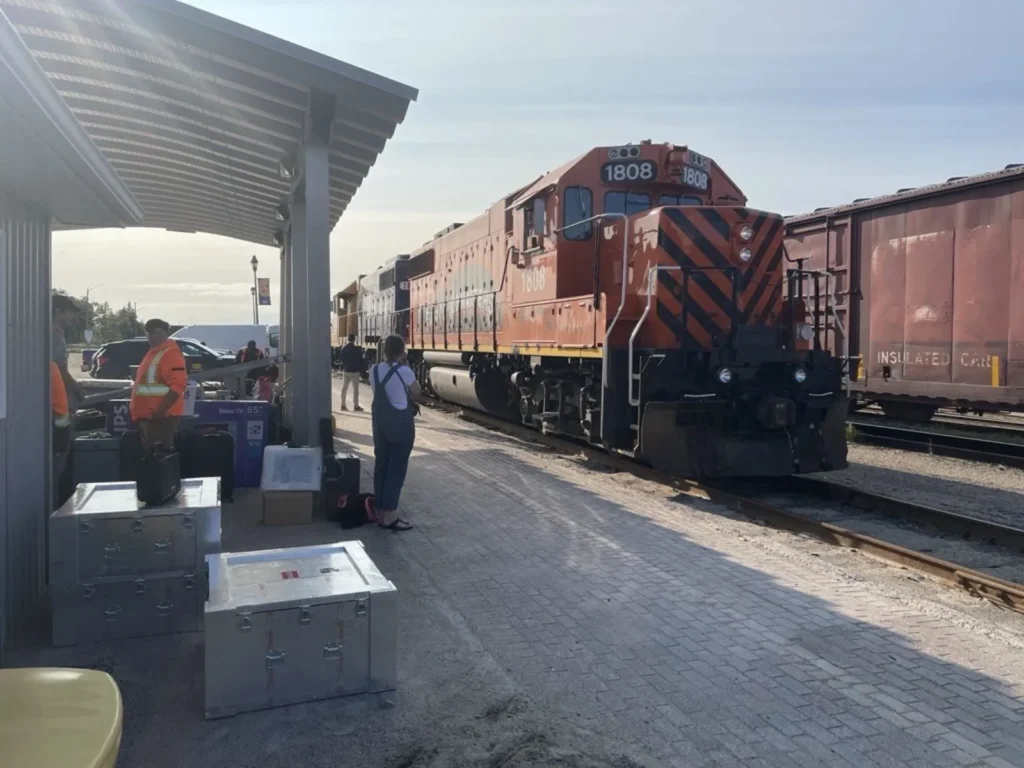
The summer journey took careful planning: the Treaty was transported in climate-controlled frames and crates, and a dedicated baggage car was provided by Ontario Northland to safely carry the Treaty from Timmins to Cochrane.
The journey also included transportation via plane, truck and boat. Everyone worked hard to ensure the Treaty had a safe and secure trip north.
Caring for the future
Recently rehoused in new frames, the Treaty was carefully monitored with an internal data logger (mounted inside one of the frames) to track heat and humidity. Parchment is especially susceptible to changes in temperature. Adriane was excited to see how well the frames performed: at one point, the temperature outside got up to 36 C and 78.5% humidity (!), but the top humidity in the frame stayed around 49%.
This showed us that the Archives can support outreach initiatives like these while continuing to preserve the Treaty for future generations.
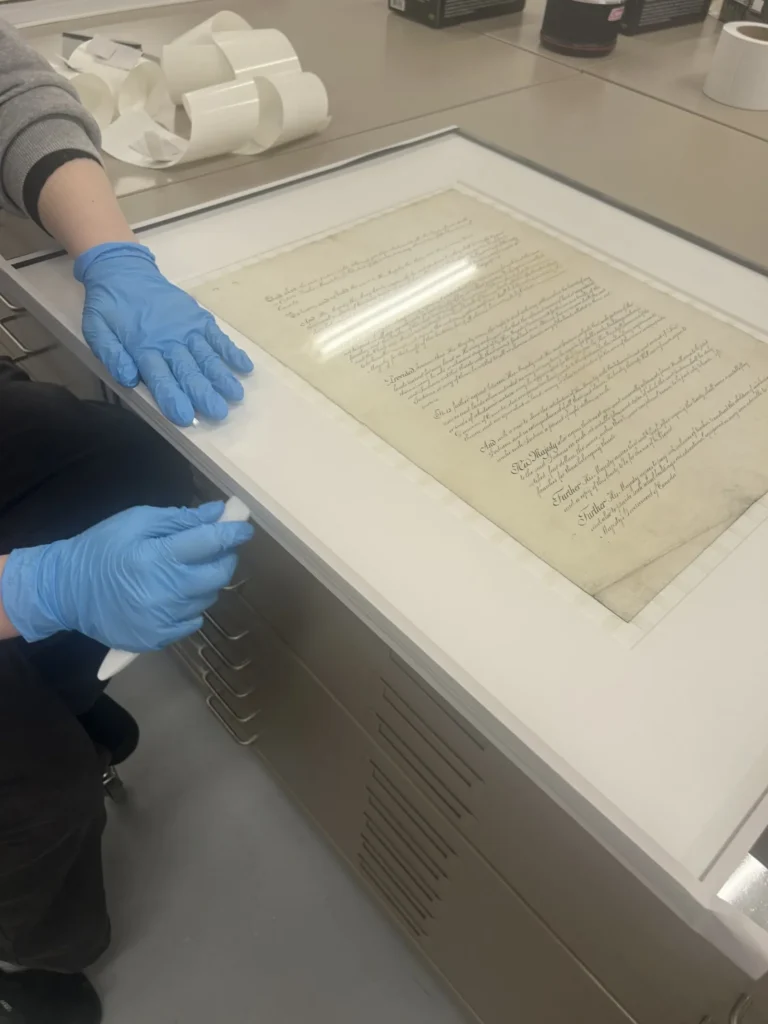
rehoused in a new frame
Building relationships
This isn’t the first time the Treaty has travelled north. But it marks an important change in the nature of the Archives’ relationship to it — and with the communities for whom it’s a vital document with an enduring legacy.
Working closely with members of the Mushkegowuk Council over the past few years, Sean, Adriane and Heather have built lasting and meaningful relationships with community leaders and Elders. The collective goal has been to find ways to share and activate the Treaty, to take it directly to community members or to provide spaces for Indigenous voices to be heard.
“It’s hard as a settler to convey the Treaty’s significance. Taking it to the community reveals just how important it is. They regard it as a sacred document, and you can feel this as they interact with the signatures. Some are angry with their ancestors for signing it, while others recognize the dreams those signatures represent. A lot of emotions are bound up with the Treaty.”
Adriane VanSeggelen, Conservator (Archives of Ontario)
A moving experience
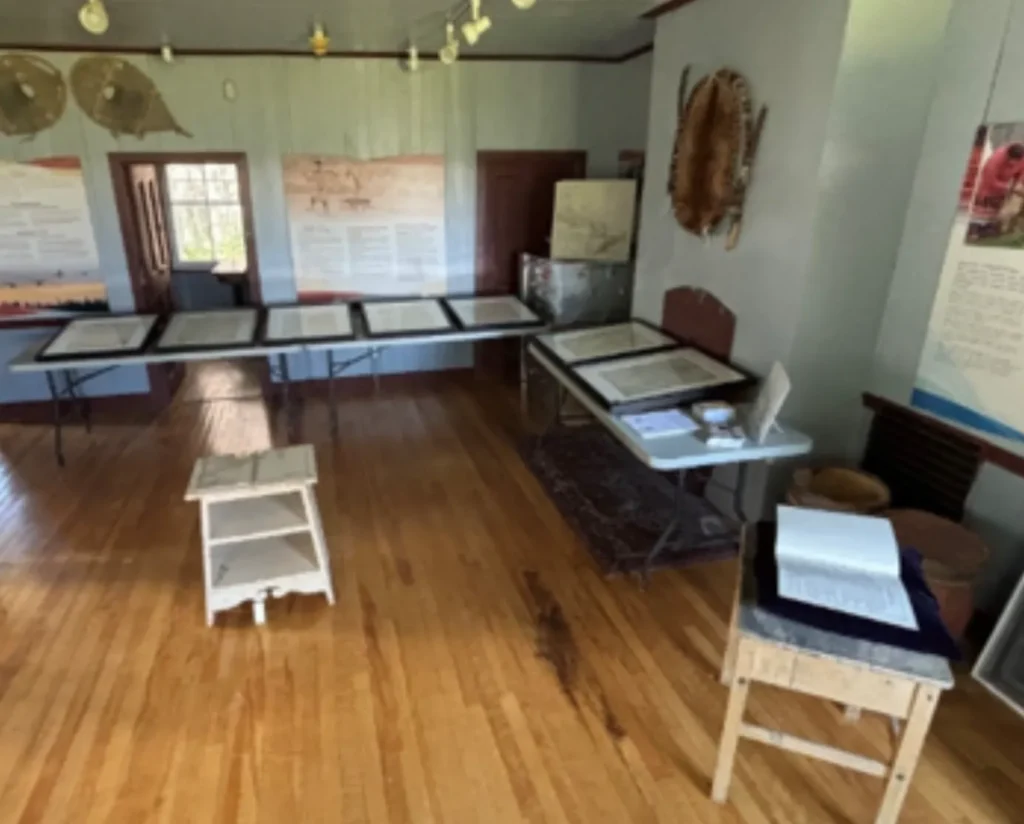
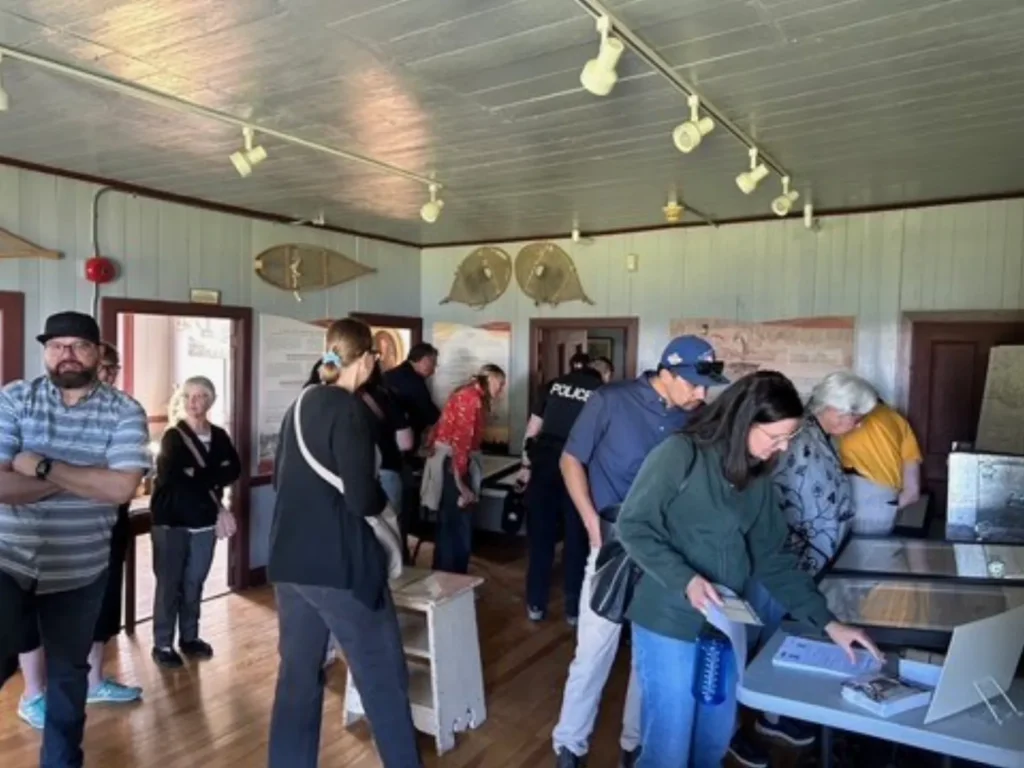
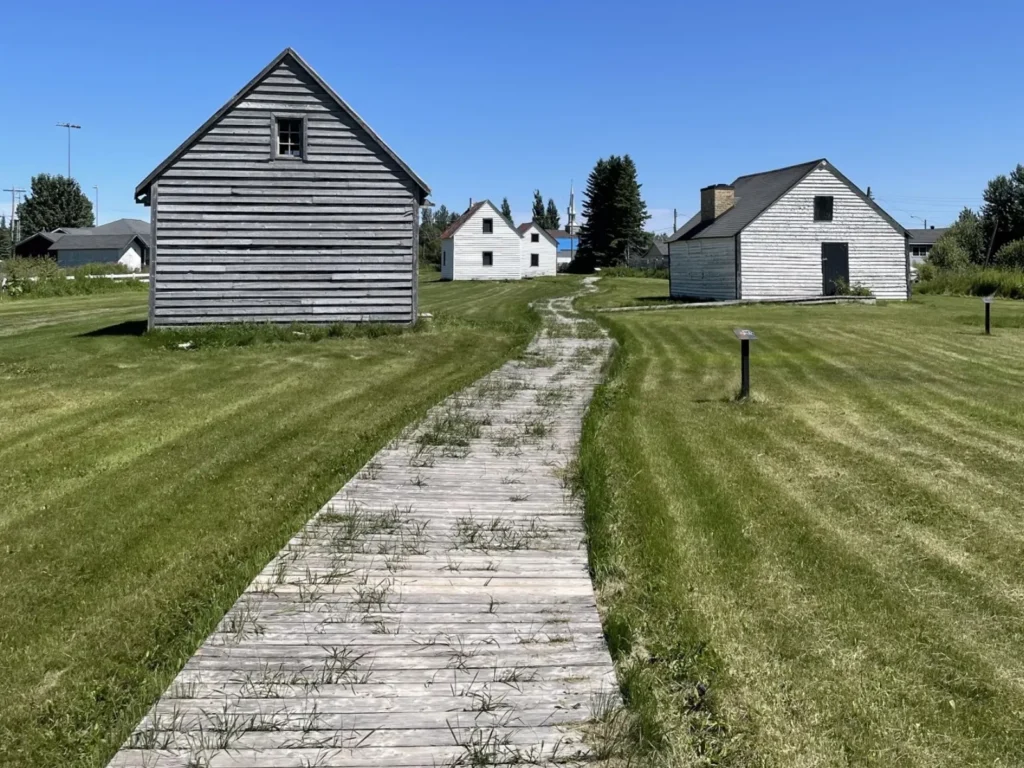
Displayed as part of GOOP, the largest summer gathering for people across the region, the Treaty was set up at the Hudson’s Bay Company staff house — about 30 metres from where it would have been brought ashore in August 1905 to be signed.
Lively conversations with locals, educators and visitors working in the region highlighted the importance of stewardship and living history. Many stayed to chat or came back multiple times, bringing family and friends. The experience was educational and deeply personal for everyone involved.
“[Treaty No. 9] is embedded with the hopes of the people and their ancestors. These documents are connections to the past. It’s hard to describe how important Treaties are to communities until you see them interact with them — people very likely know or are related to the signatories. But this doesn’t take away the fact that these documents were taken away from them, so to bring them back is key. Coupling the Treaty with the [MacMartin] diary ties the threads together. We [at the Archives] can help create an experience in which a community can reflect on its past and speak to its future.”
Sean Smith, Senior Manager, Outreach and Education (Archives of Ontario)
Learn more about Treaty No. 9 in our online exhibit: The James Bay Treaty (Treaty No. 9) online exhibit