
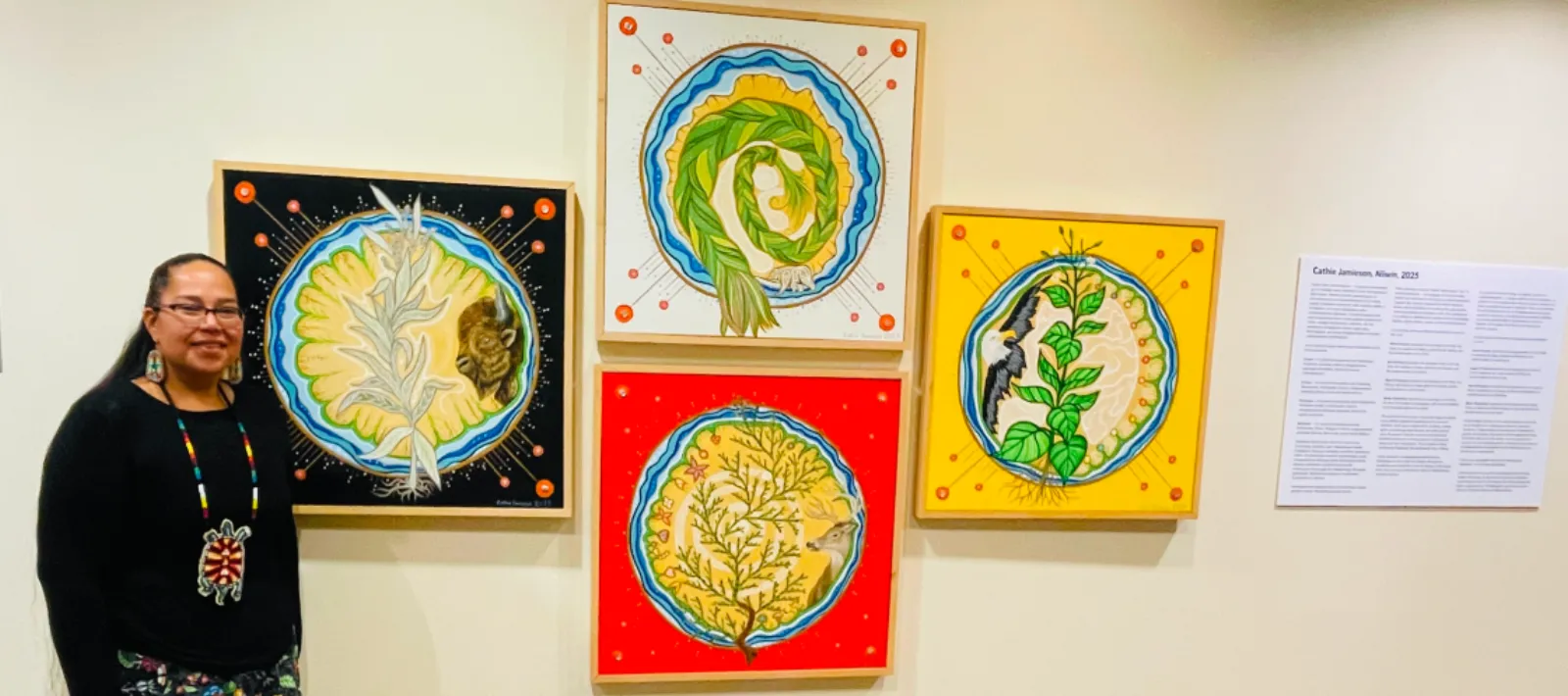
We recently developed a partnership with Anishinaabe artist and storyteller Cathie Jamieson to create a series of paintings that speak to the perspective of local Indigenous communities about the land on which we sit.
Installed on our ground floor in December 2025, the paintings serve as a visual land acknowledgement for the Archives, which is located on land covered by Treaty No. 13 (the Toronto Purchase) — an agreement for the purchase of more than 250,000 acres of land from the Mississaugas of the Credit First Nation by the British Crown.
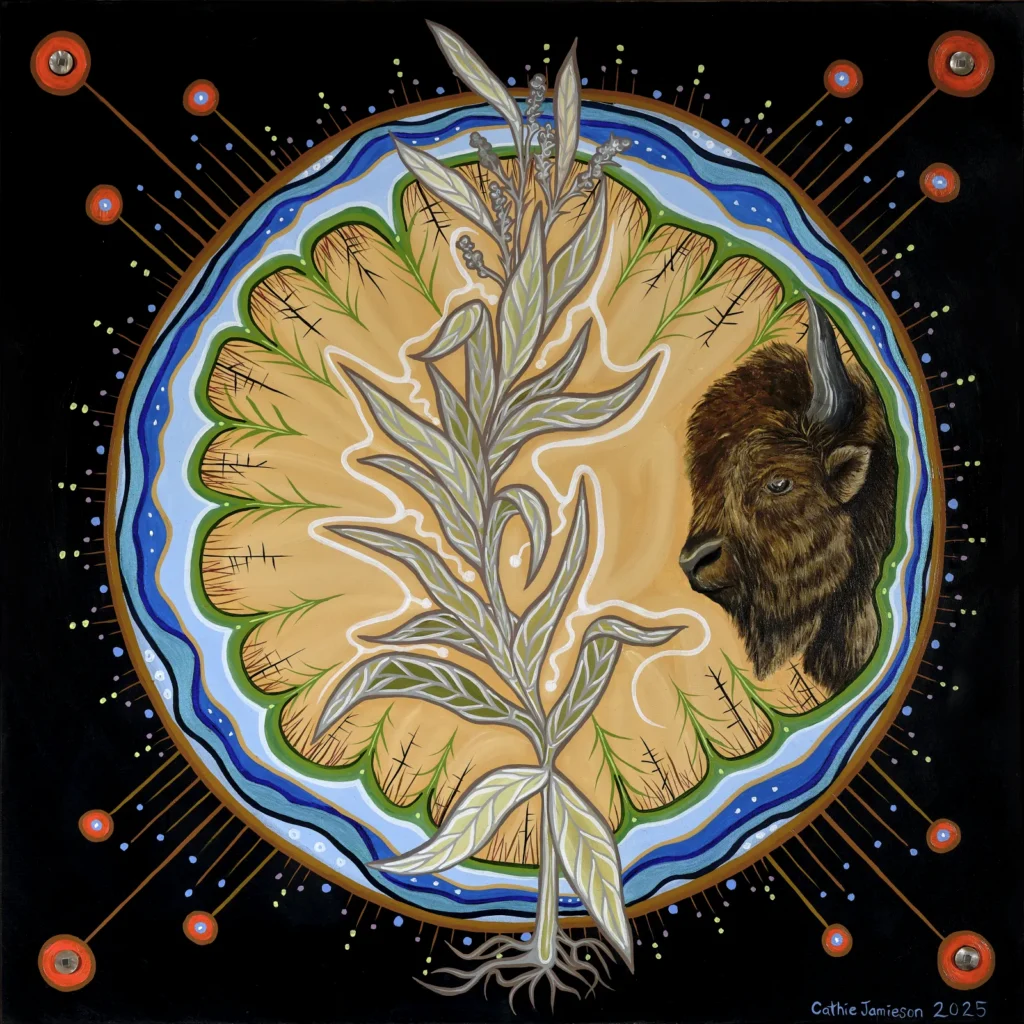
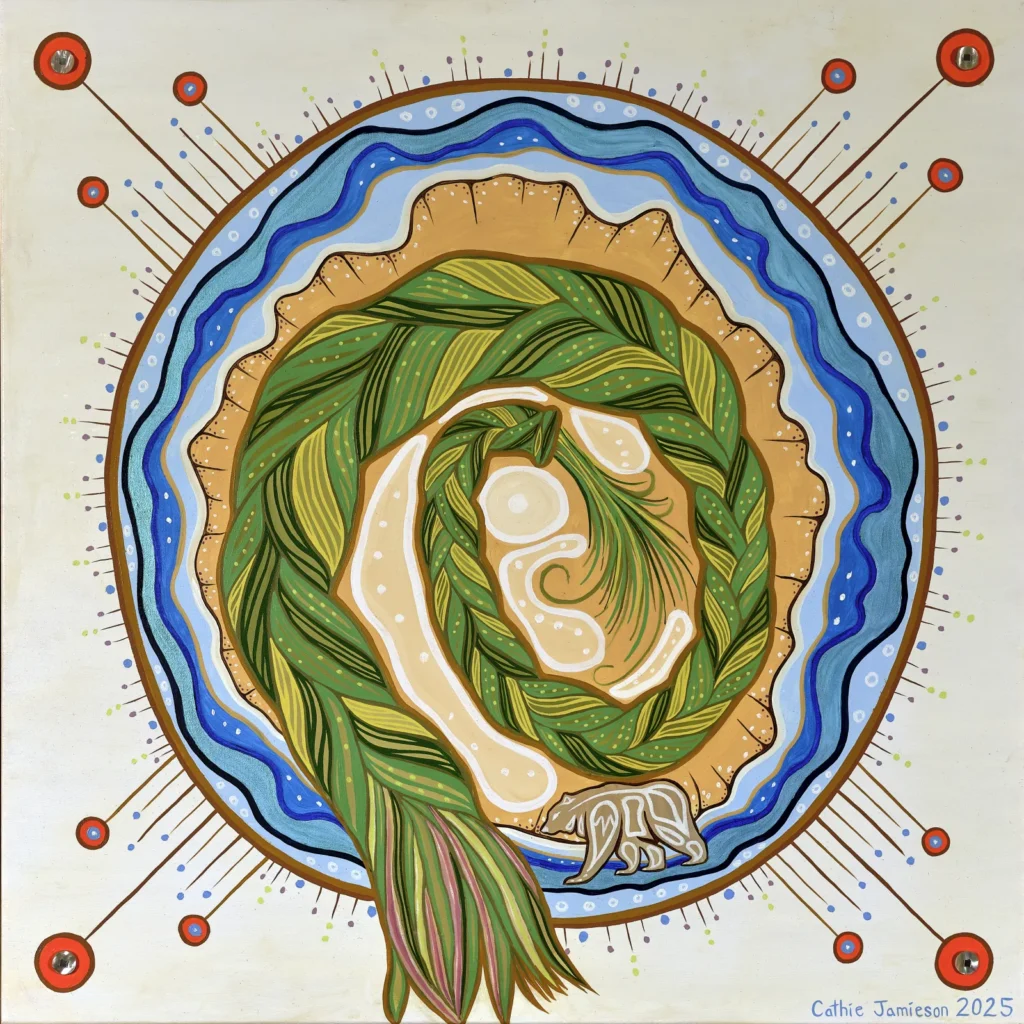
Together, the four paintings comprise the Niiwin Medicine Wheel, which symbolizes the continual life cycle and the interconnectedness of all aspects of life. The word “Niiwin” means “four” in Anishinaabemowin, the language of the Anishinaabe People who have lived on this land since time immemorial.
Cathie is a member of the Mississaugas of the Credit First Nation. She has Haudenosaunee family ties to the Six Nations of the Grand River and now lives on Manitoulin Island in Wikwemikong Unceded Territory. Her paintings encourage us to reflect on traditional and spiritual forms of knowledge, identity, culture, history, dreams and the natural elements.
Each painting expresses different teachings that make up this cycle.
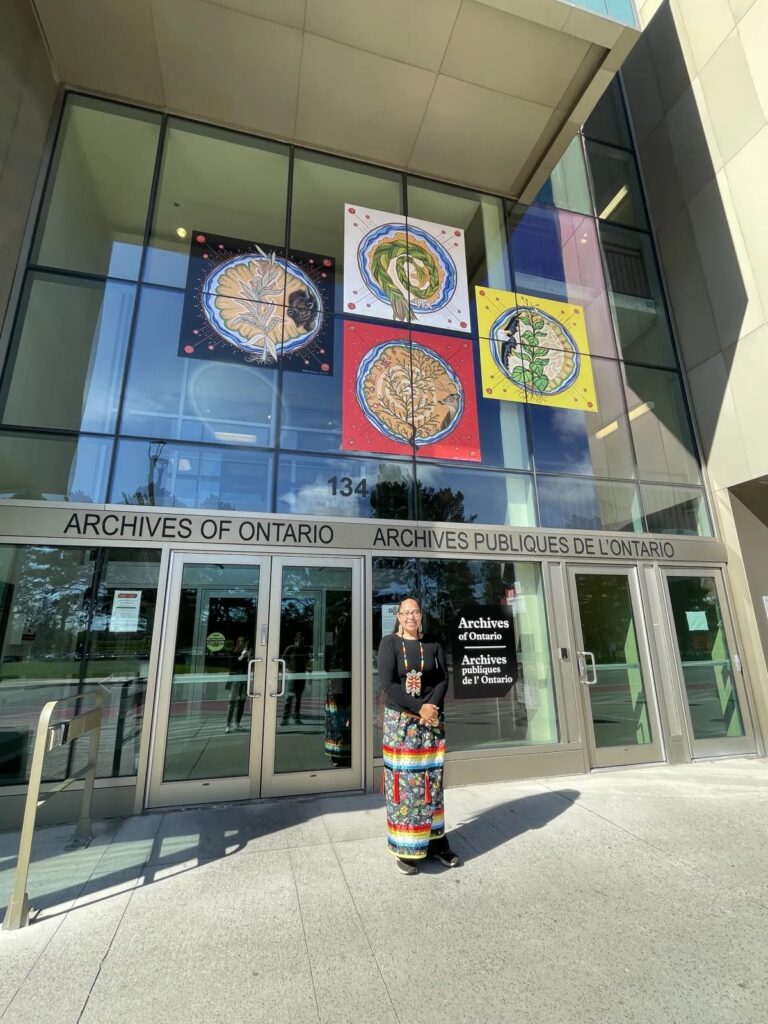
In September 2026, we also installed vinyl images of Cathie’s paintings on our front entrance windows, allowing Niiwin to deliberately take up physical space on our building and draw attention to these important paintings. The vinyls are meant to show that all ways of knowing, including Indigenous knowledge systems, should be welcomed and represented at the Archives. Indigenous memory-keeping practices predate the existence of our collections.
A celebration event in honour of Cathie’s paintings was also held on September 18, 2026, with a morning ceremony and an afternoon tobacco pouch workshop hosted by Cathie. We were honoured to have Chief Margaret Sault from Mississaugas of the Credit First Nation attend. The ceremony and workshops were an important opportunity to learn about the significance of tobacco pouches and the healing properties and meaning of traditional medicines.
As a memory institution that serves all people in the province, we will continue working to highlight Indigenous history and culture, ways of knowing and approaches to memory keeping. We recognize the importance of celebrating and honouring Indigenous voices year-round as part of our ongoing commitment to and journey toward Truth and Reconciliation.
Visit the Archives to experience and learn more about Cathie’s paintings in person, as part of your own commitment to learning about Indigenous identity and history.
Learn more about the meaning of the paintings
The following text, in Anishinaabemowin, was kindly provided by Randy Trudeau and Steven George of Manitoulin Island, Wikwemikong Unceded Territory.
Nanda niiwin maisinibiiganak – mii gwanda Anishnawbek ga bi d’naakiijig manpii nikikamik bi akwa kikendamawsid Anishinaabe. Maamwi gwanda ngasmoniignak shi aanasokawiswak awii waambdawewad eshi k’niksing manda b’madisiwin miinwa eshi aiake-aabiising manda sa b’madisiwin, mii zhanda aiamdaman manda m’shkikwadisiwini tibidawan. K’baaksendaagwas dash awii nanagadawendaman manda aadiziwin miinwa eshi mnido, wanigak kikendasowin, aadiziwin, sha-zhe-endamowin, bwaajigewin miinwa manpii aking debendagwak, mii awii ge nanagdawendaman kinwaab-madwa gwanda maisinbiiganak.
Endsa bebezhik maaba maisinibiigan kwaambdan anotch kikinomadiwinan.
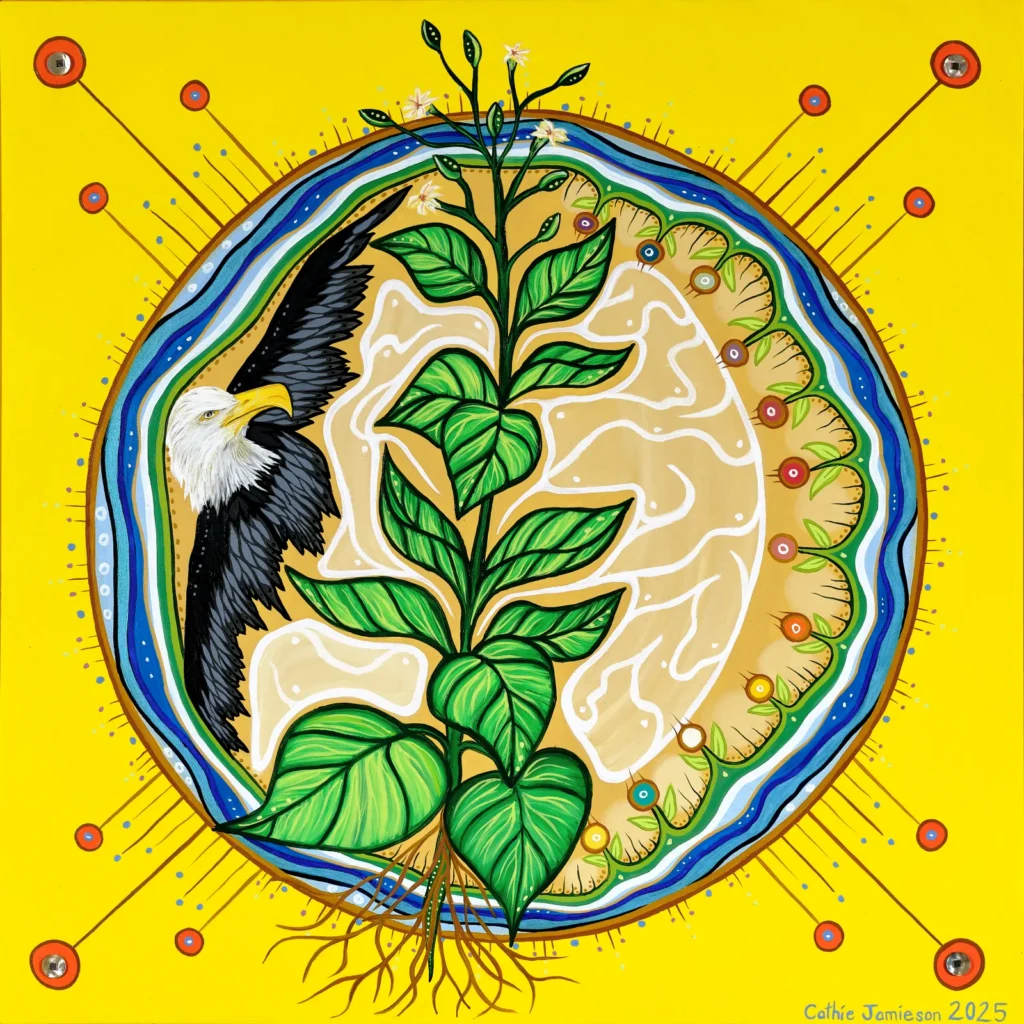
Osawa – mii manda kinomadwinan ode Waabanang, M’gizwash, zhewbak m’shki-ki, miingawewsinan onjiimigak miinokamik, miinwa eshi aansek k’dinendamowin.
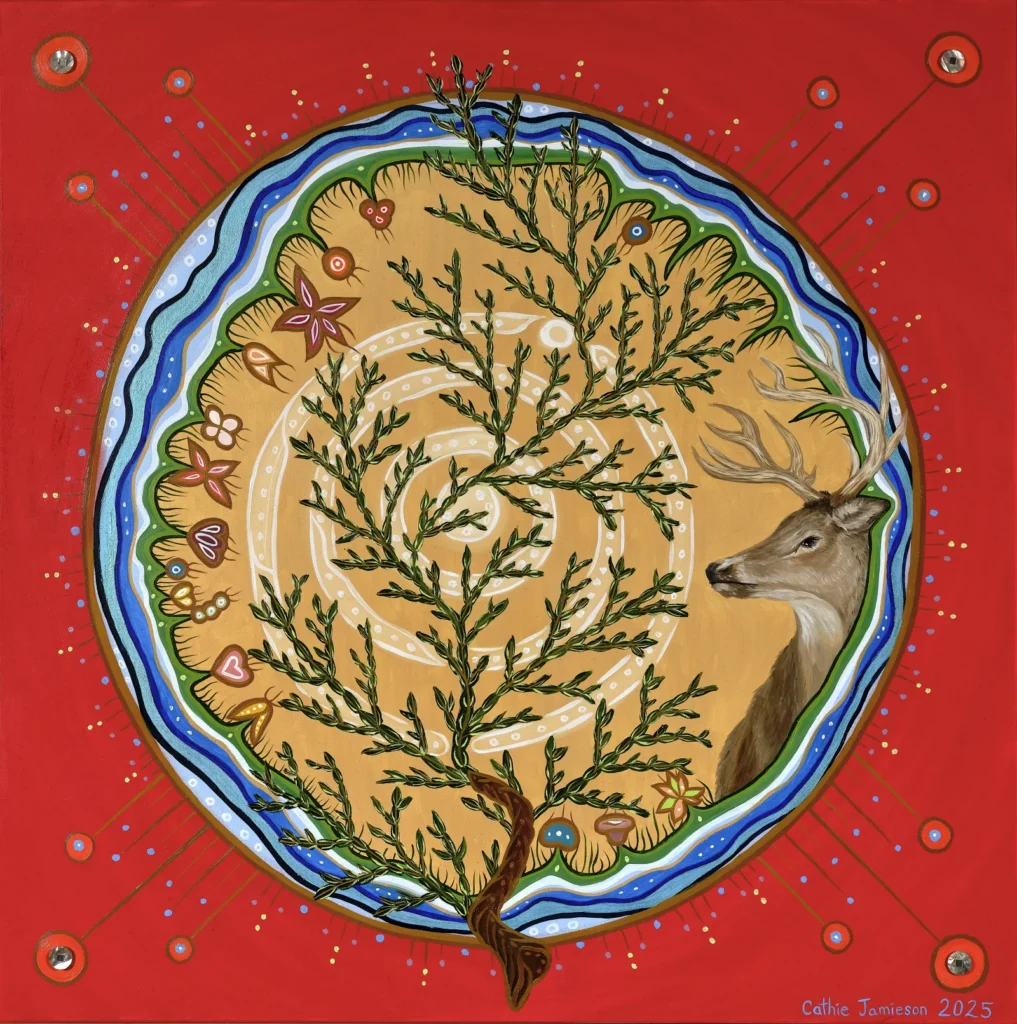
M’skwa – mii manda kinomadwinan ode Zhawinang, Wawashkesh, Kiishkandak m’shki-ki, miingawewsinan onjiimigak niibing, miinwa eshi aansek kwii-aw.
M’katewa – mii manda kinomadwinan oden Epingishmok, M’shkotew-bizhiki, m’shkotewbak m’shki-ki, miingawewsinan onjiimigak digwaagik, miinwa eshi aansek namjiwinan.
Waabshka – mii manda kinomadwewsinan ode Kiiwetinang, M’kwa, Wiingash m’shki-ki, miingawewsinan onjiimigak biboong, miinwa eshi aansek manda kjiibaam.
Kjiibaaman danisi nanda niiwin eshi msek manda b’madisiwin, awashime awii n’sidwendaman manda b’madisiwin. Kina gwa netawging, wesiinhak, jiibaamwan, nibiish, aki mania gaie nangwak wenjibaamigak nanda kinomaadiwinan. Kina gwa nanda nojimowinan miinwa dibishko aadiziwinan ani aankesiniwanmaaba Anishinawbe miinwa gaie ode dinakiiwining. Mii manda eshinikadek “Anishinawbe Aadiziwin” Anishinawbe b’madiziwin eni zhishsek.
These paintings comprise “Niiwin,” which means “four” in Anishinaabemowin — the language of the Anishinaabe People who have lived on this land since time immemorial. Together, the canvases represent the Niiwin Medicine Wheel, which symbolizes the continual life cycle and the interconnectedness of all aspects of life. The paintings ask us to reflect on traditional and spiritual forms of knowledge, identity, culture, history, dreams and the natural elements.
Each painting expresses different teachings that make up this cycle:
Yellow (Osawa) represents the teachings of the East, the Eagle, the medicine of Tobacco, gifts from the Spring, and the transformation of our Mind.
Red (M’skwa), represents the teachings of the South, the Deer, the medicine of Cedar, gifts from the Summer, and the transformation of our Body.
Black (M’katewa) represents the teachings of the West, the Buffalo, the medicine of Sage, gifts from the Fall, and the transformation of our Emotions.
White (Waabshka) represents the teachings of the North, the Bear, the medicine of Sweetgrass, gifts from the Winter, and the transformation of our Spirit.
The Spirit itself lives in each of these four stages of the life cycle, gaining heightened awareness of the nature of existence. Each stage is supported by all plants, animals, spirits and teachings from the land, the waters and the stars. All aspects of this life cycle are interconnected, providing healing and restoring balance to Anishinaabe People and their communities. This is known as living “Anishinaabe Aadzowin,” the Anishinaabe Way of Being.