
The first kick: Soccer’s early days in Ontario
Soccer has been played in Ontario since the late 19th century. This section of the exhibit explores how soccer grew and became important to communities all over the province.
Ontario’s soccer culture began to grow in the 20th century. As the popularity of the sport rose, leagues began to appear across the province. Some of the early athletes, including factory workers and even soldiers, built the foundation for the world’s game in Ontario.
Soldiers play
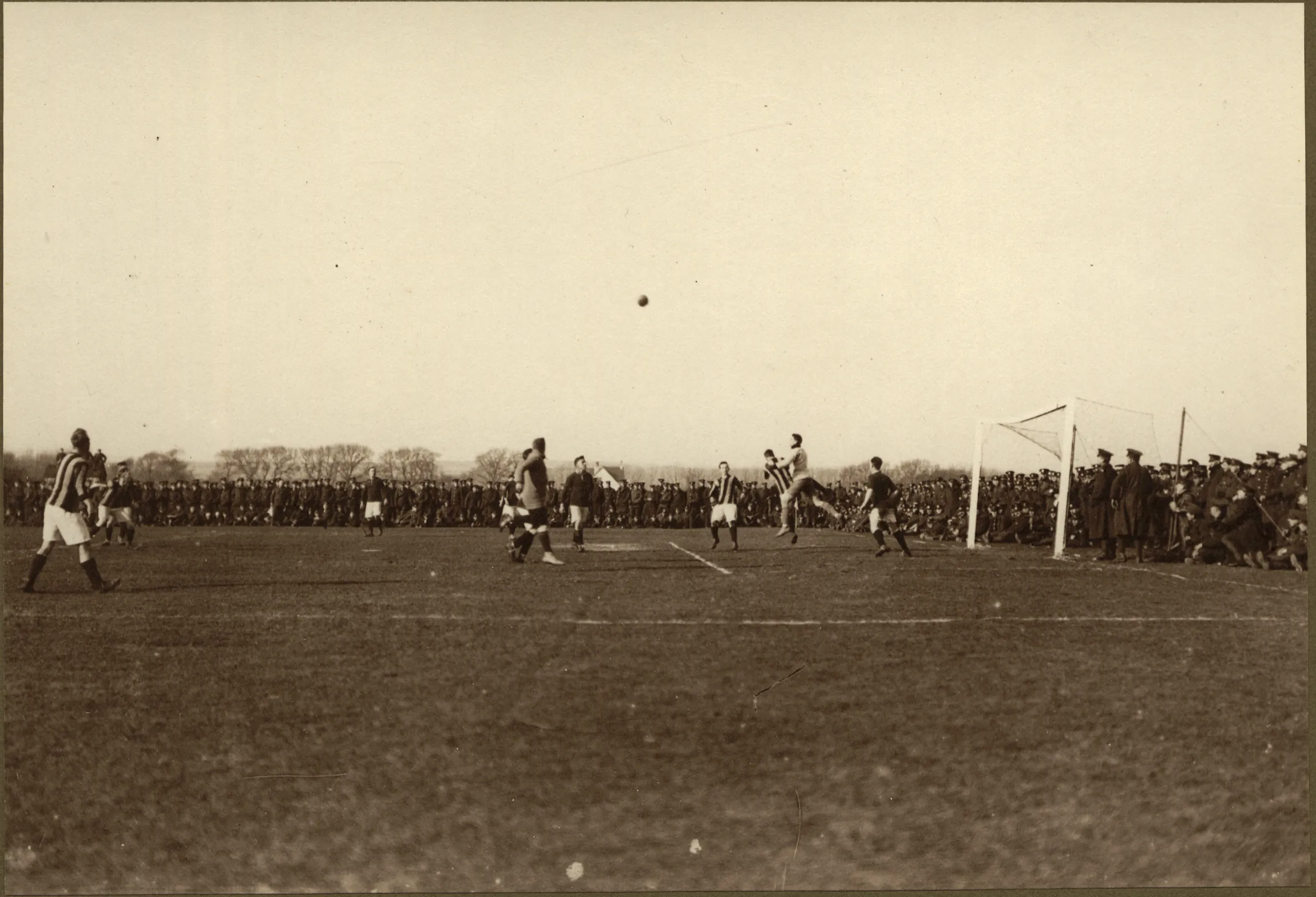
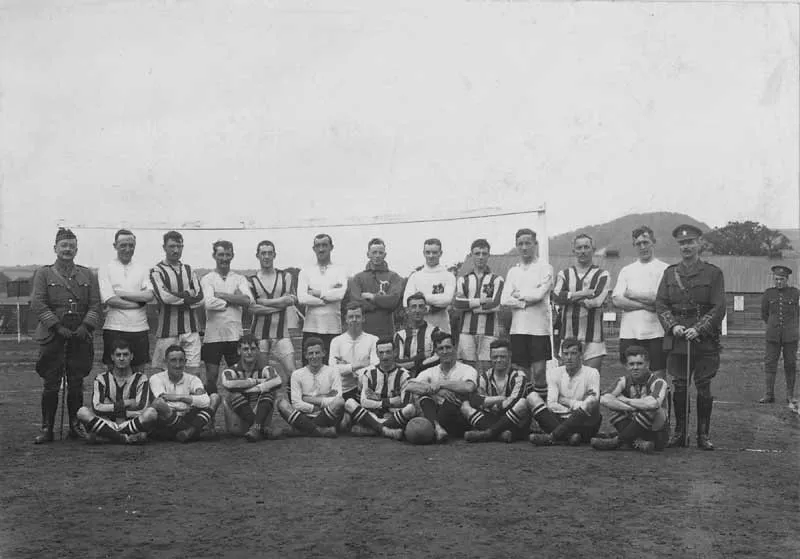
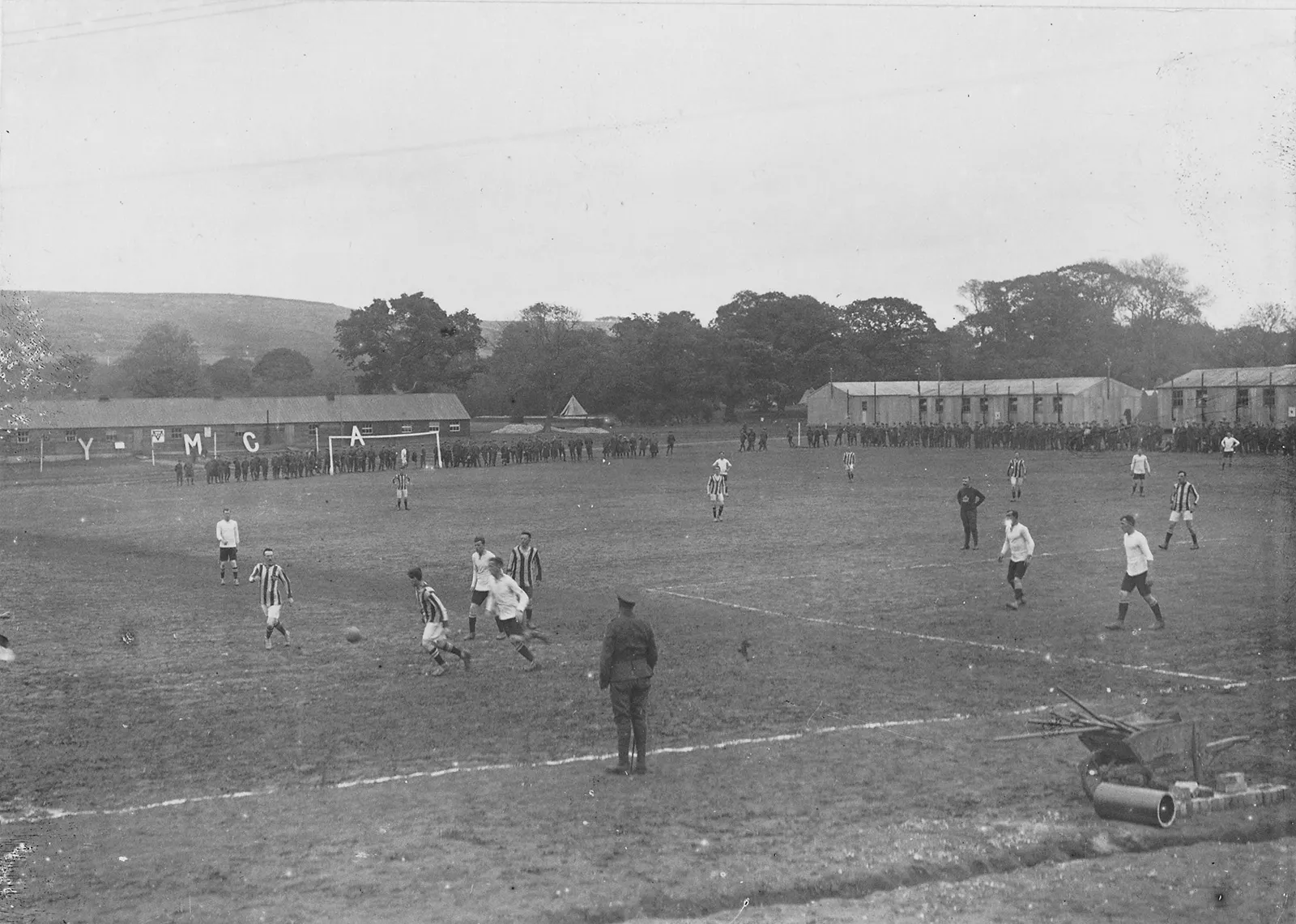
Military soccer teams were common around the time of the First World War. Soldiers from Canada returned from Europe and were familiar with the sport from their service overseas. Certain battalions, such as the 36th and the 92nd, had their own teams. Military units formed teams to help pass the time. Many soldiers enjoyed watching these matches as well.
Clubs and trophies
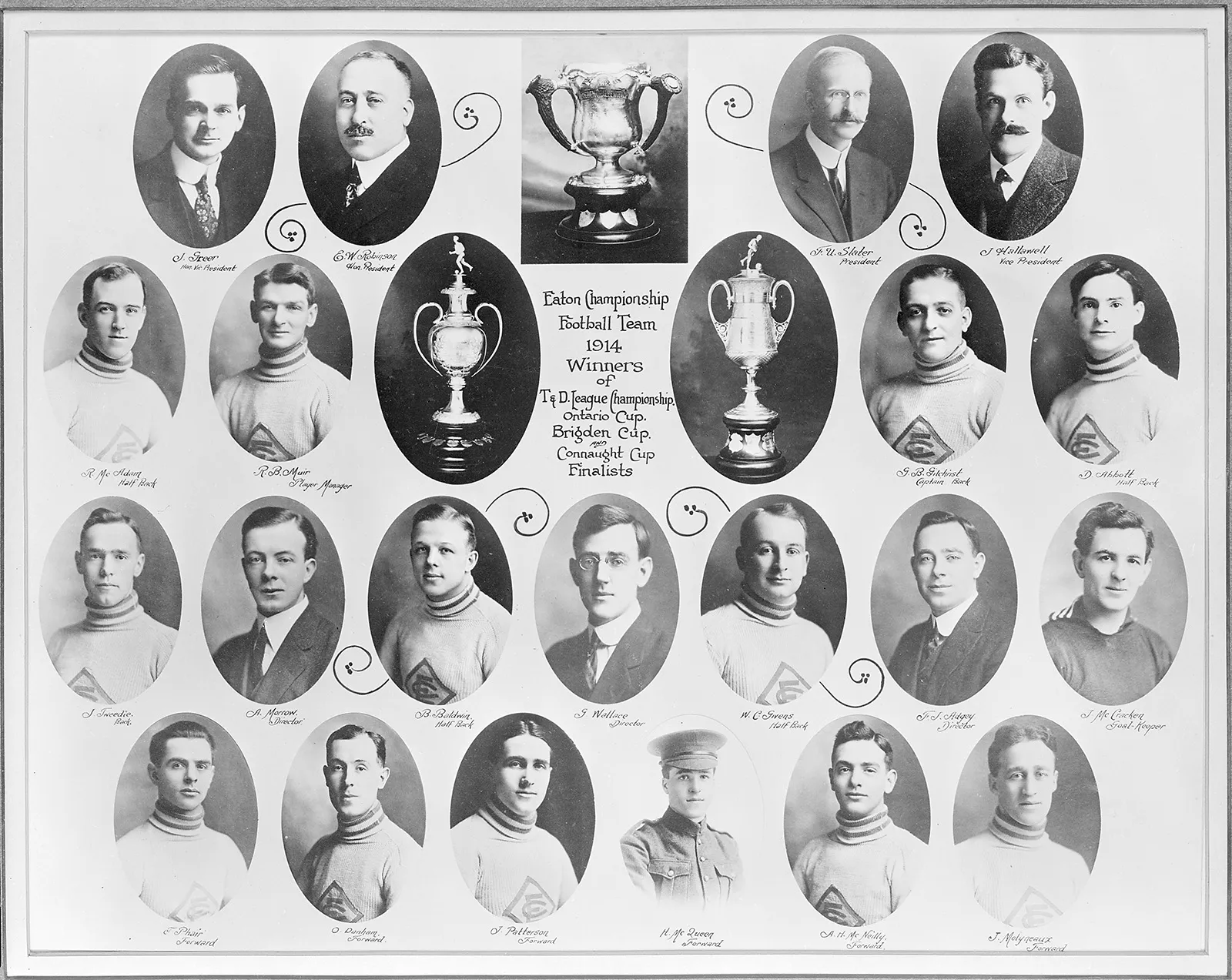
Teams like the one formed by Eaton’s department store were one of many with members stationed overseas during the war. Servicemen often relied on sports like soccer for daily physical activity, and continued to play back in Ontario.
In 1914, the Eaton Championship Football Team completed the military Canadian treble of the Brigade Cup, English Cup, and Canadian Cup. The existence and success of a military team like this shows the speed at which the game was growing. Teams were now able to compete for multiple trophies and gain recognition from people in their communities. Competitions such as these mark the transition from an informal game to a well-respected sport.
Recreation to competition
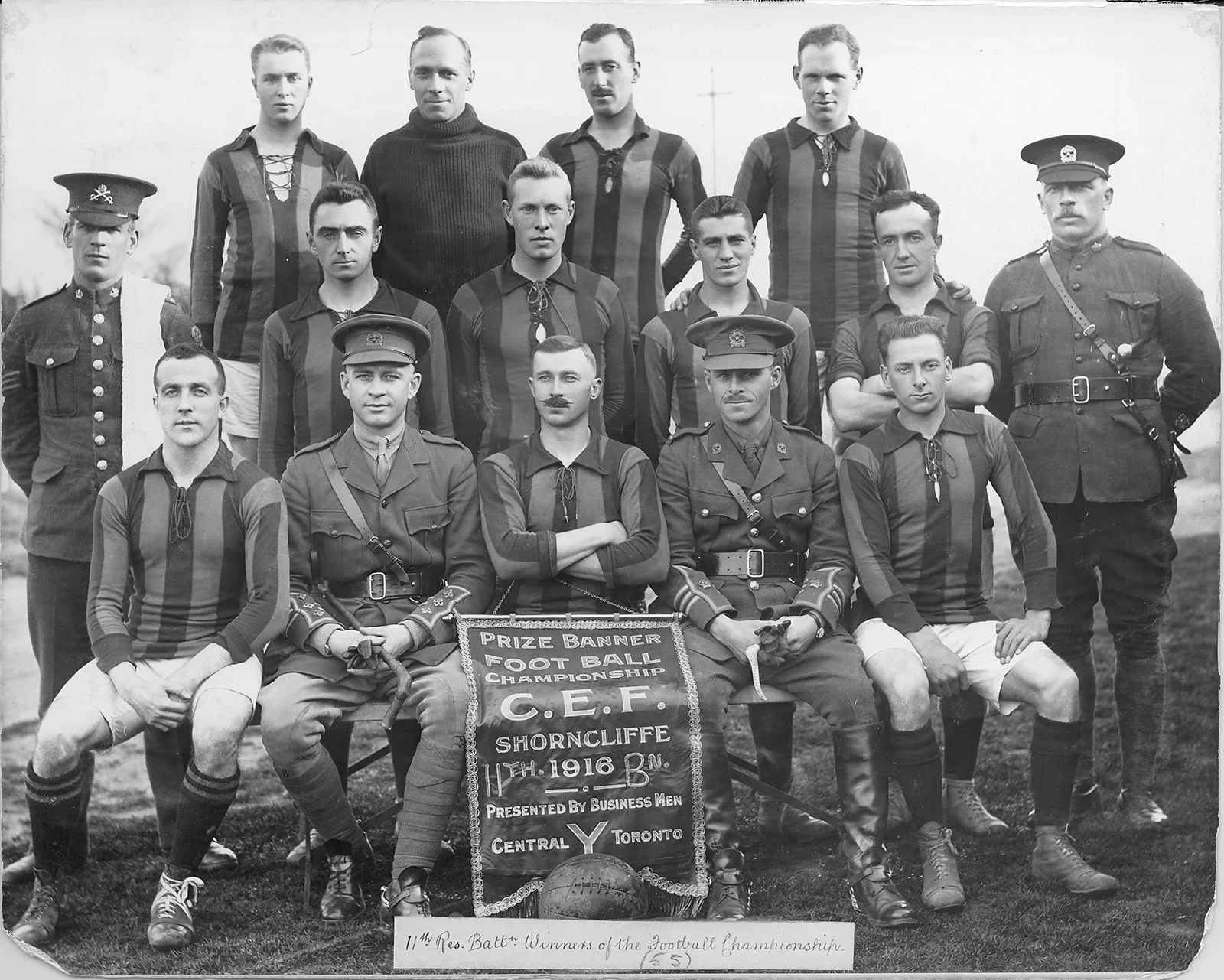
By the middle of the First World War, the formal organization of soccer as a sport had grown rapidly. Teams such as the 11th Reserve Battalion trained overseas at their base in Kent, England. Kent was truly a home away from home, as many of the soldiers referred to it as a “suburb of Toronto.” The teams were set up here before heading to the Western Front, and soldiers used the sport to keep active and build relationships. The teams competed, recorded their games and celebrated their wins. In 1916, the 11th Reserve Battalion won the Canadian Expeditionary Force Shorncliffe Football Championship.
Soccer meets the public
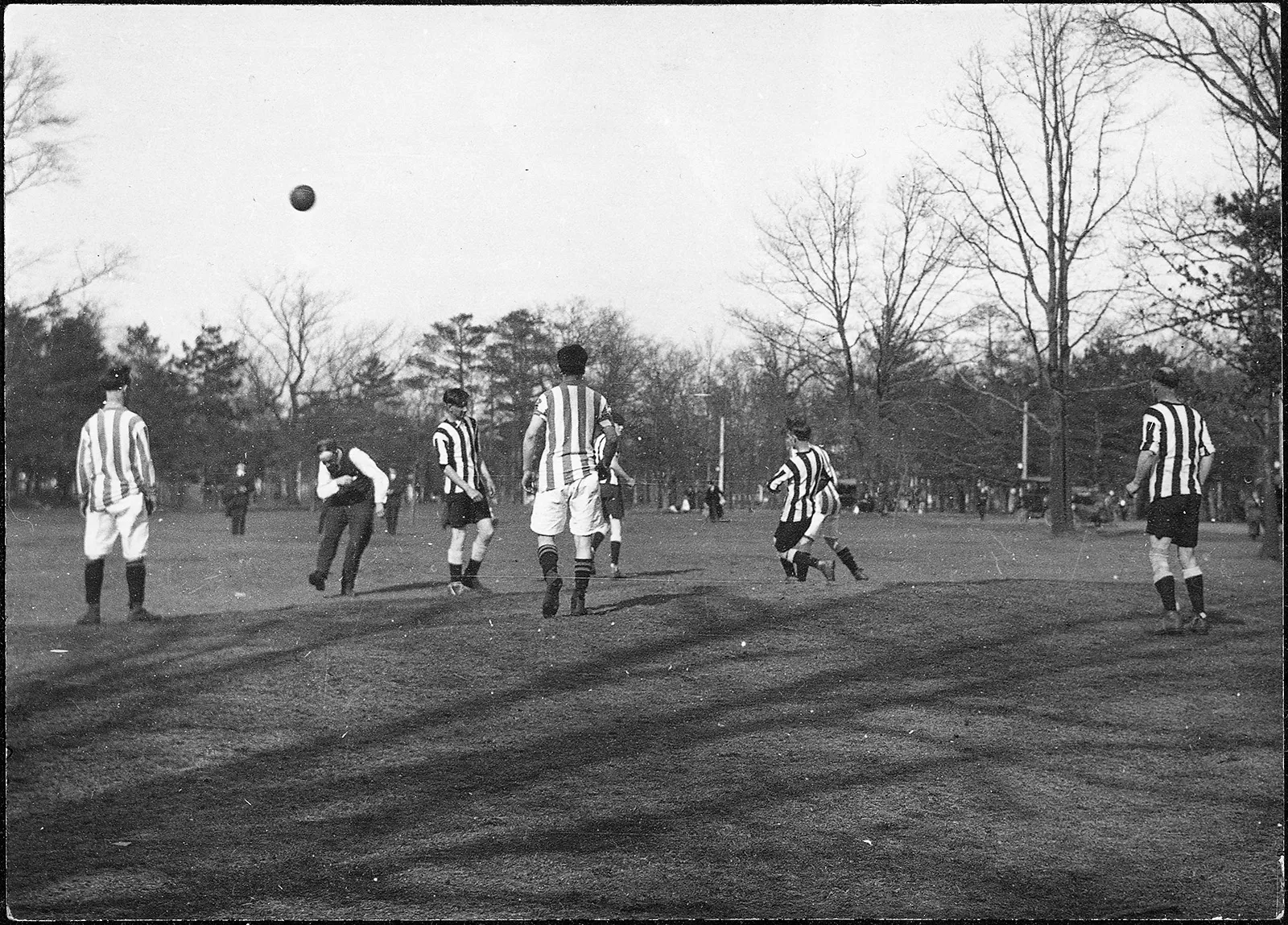
Following the First World War and into the 1920s, soccer was regularly played in public parks, like High Park in Toronto. Spectators would come to watch the game at the local level — soccer wasn’t just for soldiers or private clubs anymore. People who enjoyed the sport were now able to play competitively with and against their friends and family; it had become a part of everyday recreation.
Neighbourhood and factory clubs
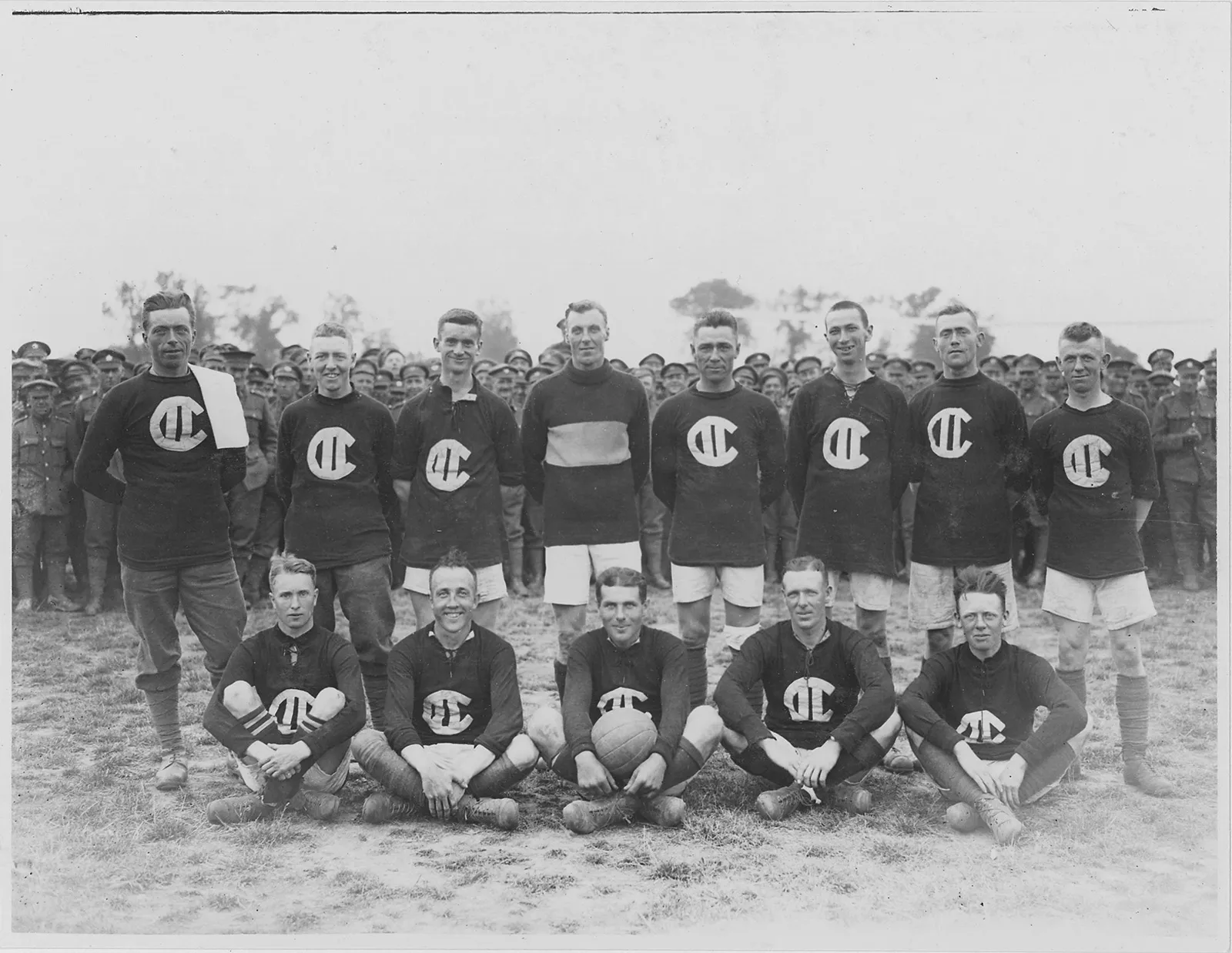
After the First World War, small community teams began to appear in Ontario. Teams like Toronto’s McCrimmon were formed by workers, neighbours and even local organizations. McCrimmon was one of many business-sponsored teams. Workers from factories, rail yards and mills formed teams. Owners of the businesses encouraged them to play because they felt it would keep them loyal, help to advertise the company and create discipline. Teams played against other nearby towns, leading to the growth of the game at the amateur level.
Going beyond the city
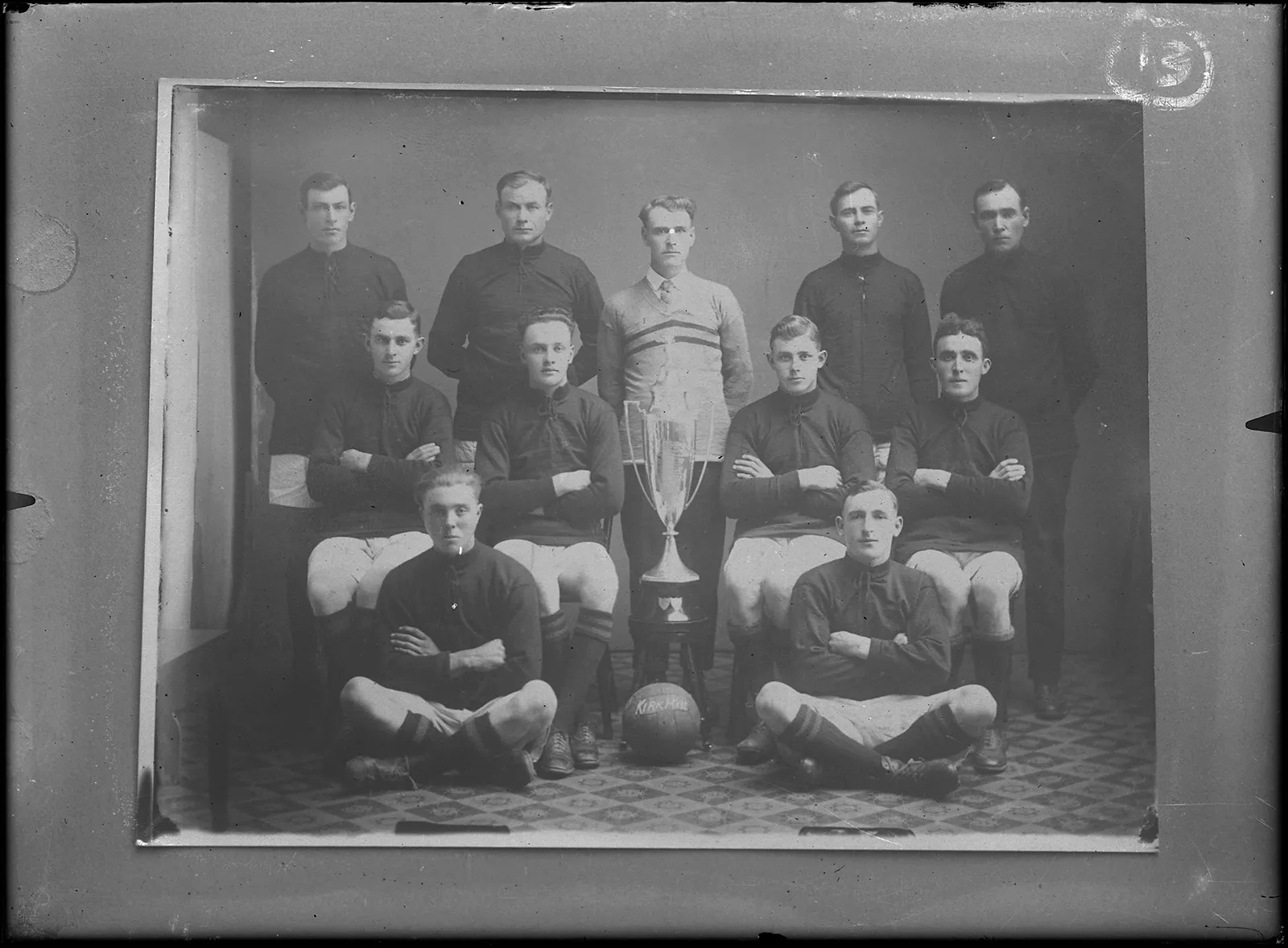
Soccer wasn’t just played in the larger cities in Southern Ontario. Rural communities such as Kirk Hill in Eastern Ontario had a team and held matches. The competitions in which they played were often organized by church-affiliated leagues. Then, as now, local teams brought the community together, creating pride for the whole town. The game was growing fast by the 1920s.
A game for everyone
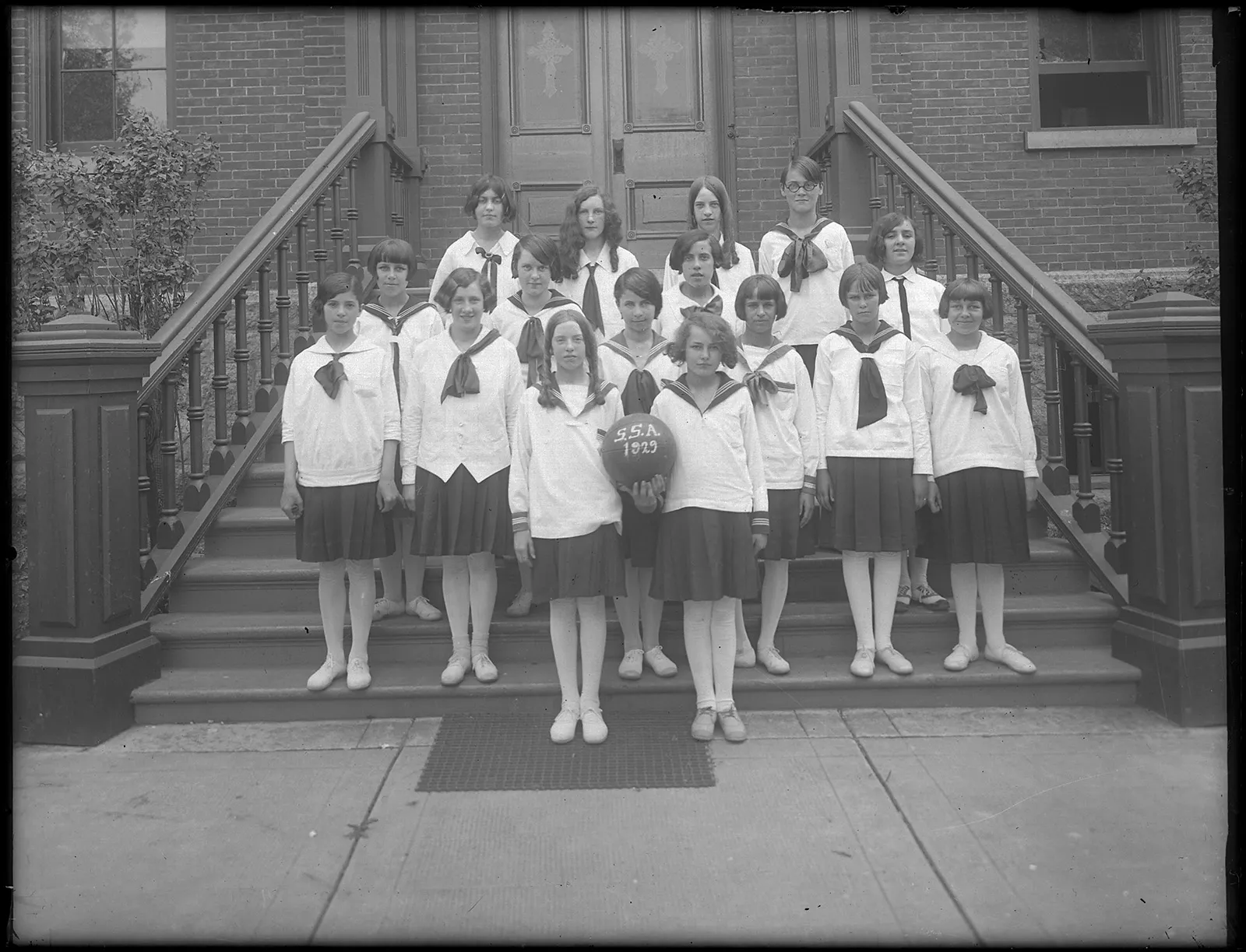
In the late 1920s, soccer was expanding to the youth level through organizations and clubs in schools. This photo captures a girls’ team from 1929, holding a ball that says SSA, which was most likely a school or a youth athletic association. Even though the opportunities for girls to participate in sports were still limited at this time, progress was being made. The sport was not just for adult men who worked in factories or served in the military; everyone wanted to play. As the game spread across all levels of society, this growing popularity helped set the stage for the rise of professional teams and leagues in Ontario.
Back to: Exhibit home
The world’s game in Ontario: Soccer, community and belonging
Next up: Chapter 02
The professional game in Ontario
Looking for more records?
Search our collection