A look inside the book
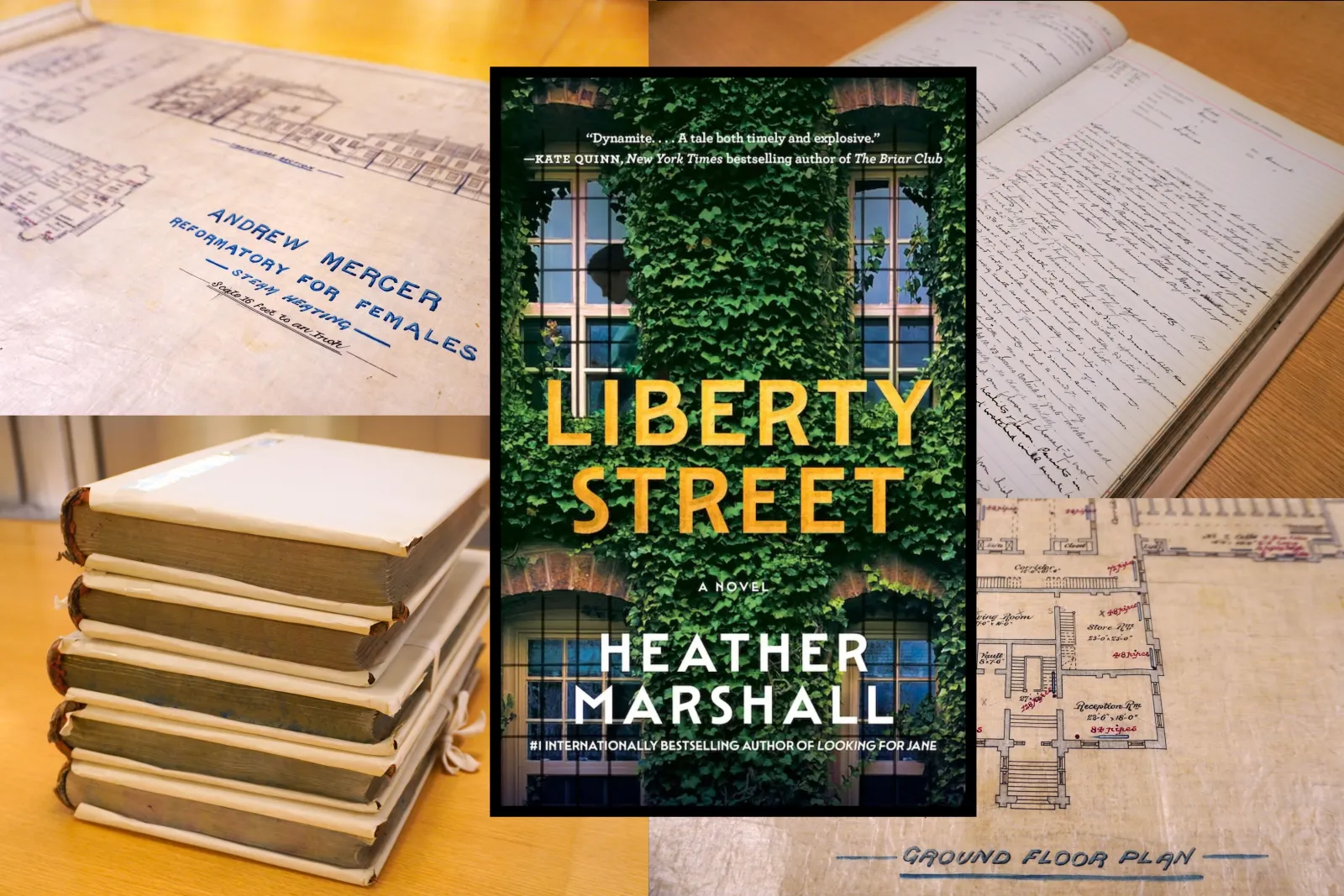
Liberty Street is a page-turner, filled with action and scenes from Ontario’s past. Published in June 2026, the novel follows two intrepid female professionals undertaking parallel investigations in Ontario in the 1960s and 1990s. Their stories overlap around the so-called “Mercer Women’s Prison,” based on the Andrew Mercer Reformatory for Females, located in Toronto’s Liberty Village from 1880 to 1969. Through journalism, police work and personal experiences, the book gives insight into covert, socially accepted and institutionalized acts of harm against women.
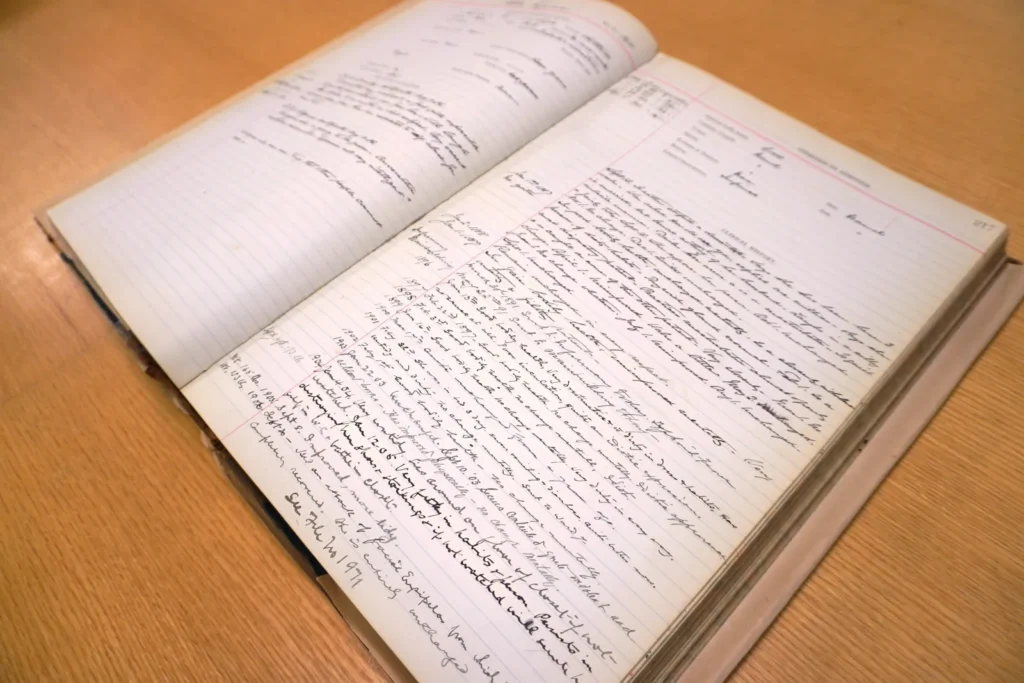
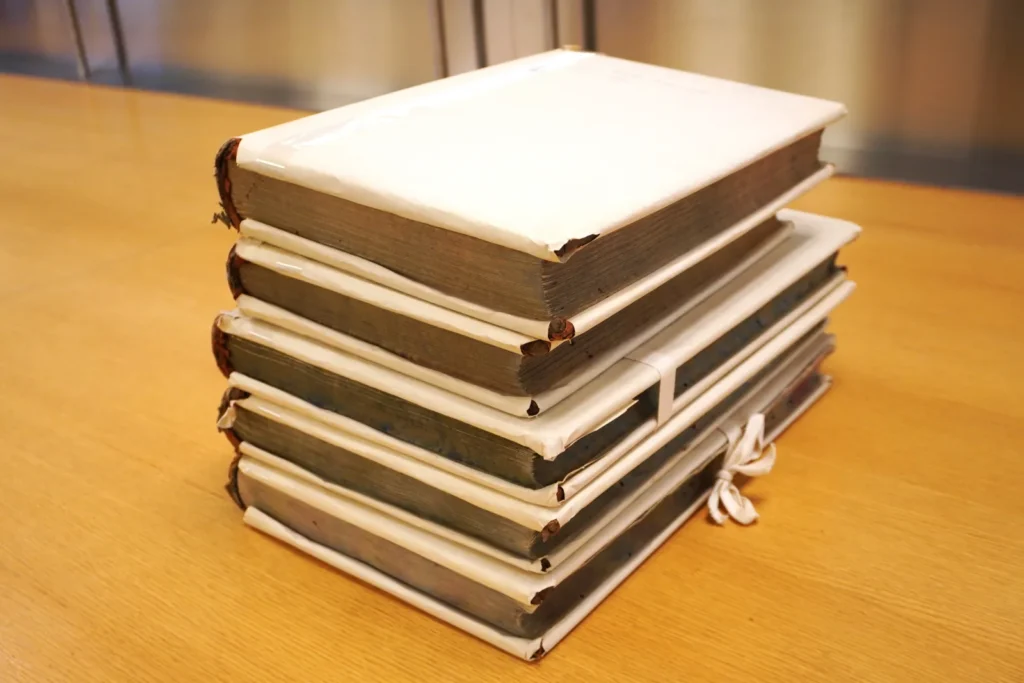
We recently interviewed the author, Heather Marshall, to learn more about the process of creating Liberty Street. The images of archival material shown in this article are from collections accessed in the making of the book.
Interview with Heather Marshall
Congratulations on the recent release of your third novel, Liberty Street! As you’re a former public servant and Archives of Ontario researcher, we’re delighted to have this opportunity to connect with you.
Let’s start with your time at the Archives of Ontario. When did you conduct your research?
I began the research process with the Archives in the summer of 2024, with some Freedom of Information requests surrounding the Andrew Mercer Reformatory records. It took a while to get all that sorted out, and I finally came to visit the Archives in March of 2025. I was so excited for that trip.
Which collections did you access?
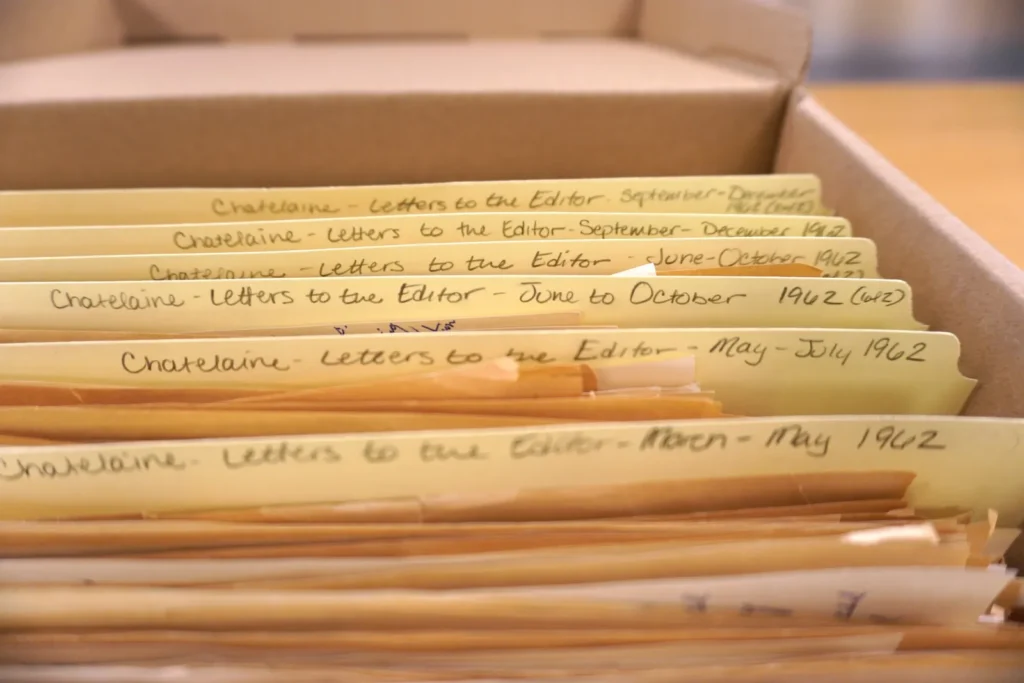
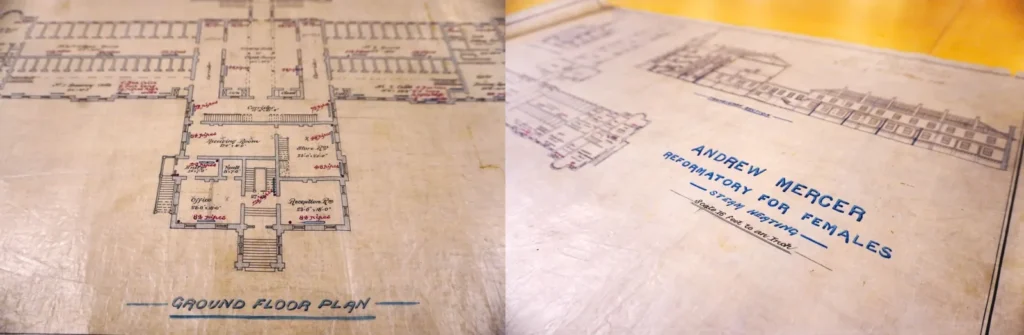
I accessed some redacted records from the Andrew Mercer Reformatory, as well as its pre-construction blueprints from Toronto Public Works. I also accessed the Chatelaine files, and some documents related to Doris Anderson specifically (mostly by her contemporaries), and those were some of the coolest materials I got to see.
How long did it take to find what you were looking for?
As I mentioned above, I first started the process in mid-2024, searching the Archives catalogue remotely to see what was there. I then had to submit a Freedom of Information request for some of the files, and the very helpful archivists pointed me to some other records I hadn’t even considered, that might be useful (and were!). So the search process, and figuring out everything I wanted to access, took a couple of months.
You’ve written about some of the challenges you faced in your research. Could you summarize the obstacles you faced for our readers?
So there are many records related to the Andrew Mercer Reformatory, including prisoner registers, medical records and — one I was particularly curious about — punishment records. I tried to get access to these through the FOI request, but because so many of the inmates at the Mercer prison were minors, the documents were nearly all protected not only by FIPPA but also retroactively by the YCJA (Youth Criminal Justice Act). I was told I would only be granted access to those records with an order from a Youth Court judge, and I am not a direct descendant of any of the inmates. So I had to rely on the few first-hand accounts that are publicly available about these women’s experiences at the Mercer, newspaper articles about the prison and the living conditions, as well as older, partially redacted inmate records from prior to the 1920s. Since I was writing in the 1960s, that was actually fine, because I could fairly easily extrapolate on what the prison would have been like in the 1960s, why women would have been incarcerated there, etc. And the conditions certainly hadn’t improved since the 1920s, that’s for sure . . .
Where research meets storytelling and inspiration
Did your research change the story you were writing — or shift the narrative at all?
Actually yes, and this is one of my favourite parts of researching my novels. When I get stuck with a plot or character snag, I often do some research because the real history of any story I’m writing is so rich, I get such inspiration from the research. For Liberty Street, one of my characters came from my research at the Archives. At one point I had access to a copy of a prisoner register from the early 1900s that listed one woman who was in and out of the Mercer at least three times (that I could find), and her offence was listed as “running a house of ill-repute.” That was the inspiration for one of my favourite secondary characters, June Jones. I finished editing Liberty Street over a year ago and I still can’t get her out of my head.
How would you describe the value of archives to aspiring fiction writers?
If you’re a writer of historical fiction, I would say they’re truly invaluable. There’s only so much you can learn on the internet (and even with a non-AI-polluted search engine, we increasingly have to question our findings), or through second-hand research. Going and seeing these records and handling them just gives you such a different understanding of the material you’re researching, makes you feel so much closer to it. And I think in turn there’s no way that can’t improve your writing, to help your characters and setting leap off the page the way readers want, and writers aspire to.
What inspires you about writing historical fiction?
I often describe it to people as both an honour and a privilege to get to do what I do. I’m a history lover to my core, and I also studied political science, so I’m still a bit of a political animal. And the thing about studying politics is that you come to realize that we ignore the lessons of history at our collective peril. So in getting to write commercial historical fiction that is read by a wide audience (a fact that I’m grateful for every day), I also get to educate people about history in this entertaining, accessible way. And I often end up bringing politics into the story and themes, because I write about women’s lives throughout history, and women’s lives and bodies are relentlessly politicized. You can’t separate women’s history from politics, in my mind. And I honestly take pride in not shying away from that fact, or skirting over the political realities within the history I’m writing about. [. . .].
Aside from the politics of women’s history, I just love learning about individual women in history, and the ways that they exhibited strength and character and grit in any time period I’m writing about. So often, women’s experiences happen off page in the history books, or between the lines. So it’s an honour to look at and question who these women were between the lines, and wonder about their lives, dreams, losses and achievements. So often, I don’t think they were all that dissimilar to women today. We just wear different clothes now (which, incidentally, is also a wildly fun thing to research!).
The two main characters in Liberty Street are both researchers. Do you identify with them?
Oh, I can definitely be a dog with a bone, just like Emily and Rachel, if the subject is right. I have such respect for those characters, but I’m also not sure I could do what they did in the story!
Thank you so much, Heather. We’re grateful for you taking the time to connect with us and answer these questions.